博文

目前显示的是标签为“magnetic separator design”的博文

Magnetic Equipment Improvement in Magnetite Beneficiation Optimization Process

图片
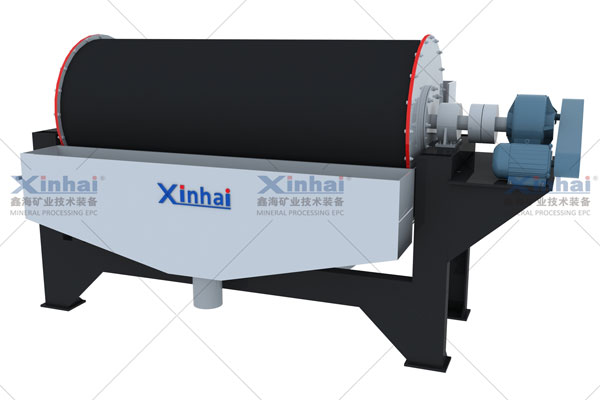
Equipment plays an important role in   magnetite beneficiation process . The traditional permanent magnetic cylindrical magnetic separator has disadvantages, including limited use range, and bad separating effect. New type high efficient wet permanent magnetic cylindrical magnetic separator produced by Xinhai has a large use range and good beneficiation index. In new-built beneficiation plants, it has obvious effect on magnetite beneficiation optimization process. Now, it will be introduced briefly below. All  magnetic equipment  all adopts neodymium iron boron magnet with high energy product and high intrinsic coercivity. Magnetic field intensity is large and has the advantages of extensive magnetic effect. The demagnetizing index is less than 5% for eigh years. To achieve efficient separation from magnetic minerals and non-magnetic minerals, new type permanent magnetic cylindrical magnetic separator adapts large magnetic wrap of the new structure with gradual chang...

Dry or Wet Magnetic Separator? How to Choose the Type of Magnetic Separator?

图片
As a common beneficiation process, magnetic separation process separate minerals based on their magnetic difference, which widely used in the separation of black metals, non-ferrous metals and rare metal ores and the removal of iron impurities from other minerals, such as magnetite, titanomagnetite, hematite, limonite, siderite, ferrochrome ore and manganese ore, etc. While the common types of magnetic separation equipment can be classified into dry magnetic separator and wet magnetic separator depending on the material to be processed. The dry magnetic separator is the mainstream magnetic separation equipment and it was also used for industrial weak magnetic separation as the earliest magnetic separation equipment. It is suitable for dry and water-deficient areas and mainly used to select bulk, coarse-grained ferromagnetism and finer particles of weak magnetic ore, which has a simple Process flow. Common dry magnetic separation equipment includes dry weak magnetic separator (iron re...

Which Types of Magnetic Separator Should We Choose?

图片
The magnetic separation process is achieved by the effect of magnetic force and mechanical force on ore particles in the magnetic field of magnetic separator. The particles with different magnetic move along different tracks, and thus two or several individual mineral processing products are separated. According to the dry and wet degree of minerals, the types of magnetic separator can be divided into dry magnetic separator and wet magnetic separator . So, how should we choose the right type of magnetic separator? 1. Application of types of magnetic separator Wet magnetic separator is suitable for the coarse separation of lean iron ore after coarse or medium crushing, raw ore separation that has not been fully restored in the closed-circuit roasting operation of hematite reduction, iron removal from petuntse in the ceramic industry, as well as other iron removals in foundry sand, refractory materials and other industries. Besides, wet magnetic separator is suitable for those areas...

How Does Wet Magnetic Separator Achieve Tailings Discarding?

图片
Xinhai wet magnetic separator is mainly used for wet magnetic separation process, and it is suitable for dealing with magnetite, pyrite, calcined ore, ilmenite and other materials whose (particle size is less than 3mm). besides, it is also used in the iron removal of coal, non-metals and building materials. The magnetic system of the magnetic separator is made of high-quality ferrite material and thulium magnet. The average magnetic flux density of the drum is about 100 ~ 600mT. Here is mainly about tailings discarding by magnetic separator. This wet magnetic separator adopted a kind of newly developed Nd-Fe-B magnetic material with high permeability and magnetic energy as the magnetic source. In addition, the magnetic separator design was based on the magnetic induction of ores and actual operation analysis. so, it is widely used in the iron removal of various kinds of mines, such as manganese ore, limonite, hematite, goethite, siderite, cerium chromite, niobium, tantalum, titanium...